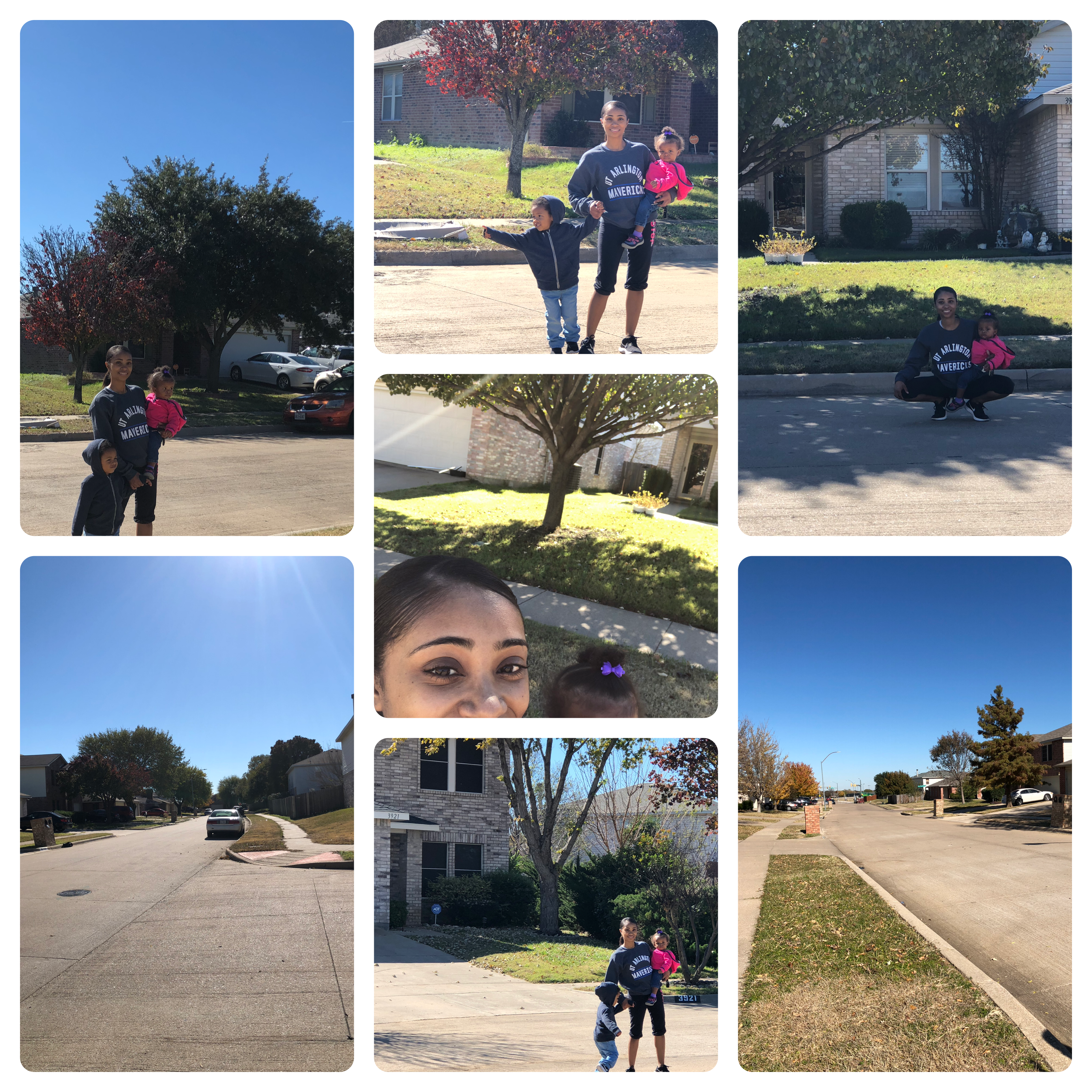
For my community science project, I included my children and we explored our neighbors’ trees in their front yard. The weather was clear and sunny on Tuesday, November 20, 2018 around noon. I wanted to get my children out of the house and take advance of the beautiful weather that we walked to our neighborhood park. On our way to the neighborhood park you can tell the season is autumn by the sign of leaves falling from the branches of trees and the leaves are turning colors. It is a lovely sight to see these things happening. I find it interesting that my neighbors all have different type of trees in their front yard and the leaves are different colors, shapes, and sizes. For example, my neighbor across the street has a tree that is almost full of green leaves. It makes me wonder why the leaves on her tree hasn’t started falling completely yet but another neighbor a few houses down leaves have already started turning a reddish color.All the homeowners’ trees should get the same amount of sunlight and should be the same soil. I wonder if it makes a difference how much or little we water the trees in our yard.
I like this community science project and feel like it is easy for my future students to do in my classroom. I want to teach my students that science is all around them and they do not have to always go out and spend money and go places to enjoy the sciences around them. your group reflection on how this experience will affect your future classroom. What if I teach at a title 1 school with low income students and they their families cannot afford to take them to museums and other places. I do not want that to discourage them from participating in a community science project. Students can just step outside their home and go on a nature hunt or explore the world around them.They can do this same project but instead of observing autumn leaves they can observe plants, animals, etc. This project can be used at any grade level and different subjects. I can make it easy or difficult that you want it to be. For example, for 1st graders I can have a scavenger hunt and have them collect 5 red leaves, and 5 yellow leaves, and 5 green leaves. They can learn about science and including math in the lesson as well.

 Jenise's Science Blog